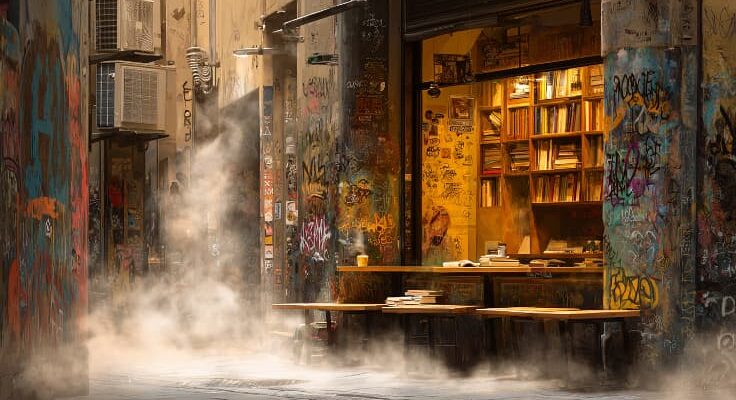
Most cities smell like one thing. London? Rain and old buildings, and New York, subway exhaust and street food. But Melbourne is weird. Walk around and you’ll catch whiffs of fresh espresso, musty book pages, and that sharp spray paint smell all mixed together.
It’s not an accident. This strange combo basically tells you everything about how Melbourne became Melbourne. Somewhere along the way, coffee turned into a competitive sport, bookshops refused to die, and painting on walls became actual art instead of vandalism.
How Coffee Became a Religion
Melbourne takes coffee way too seriously and everyone knows it. Step into any random laneway cafe and watch the barista at work.
This whole thing started with Italian and Greek immigrants after World War II. They showed up with espresso machines and strong opinions about how coffee should taste. No weak, watery stuff. Just proper espresso that actually wakes you up.
The 1990s is when things got crazy. Suddenly every laneway had three coffee shops. Then five and ten. Baristas started getting treated like rock stars. People developed loyalty to specific cafes like they were supporting football teams.
Why Melbourne’s coffee scene is different:
- Beans matter more than the brand name on the cup
- Baristas train for years, not days
- A bad coffee gets you judged harder than most crimes
- Ordering a cappuccino after 11am might get you weird looks
The competition pushed quality through the roof. Bad coffee shops just disappeared because nobody would tolerate them. According to Visit Victoria, this created a cafe culture that attracts coffee nerds from around the world.
Bookshops That Refused to Disappear
While the rest of the world was declaring bookshops dead, Melbourne’s were thriving.
Independent bookshops popped up in the weirdest places: basements, upstairs rooms, laneways so narrow you could barely fit a bookshelf. These were cramped, chaotic spaces that smelled like old paper and somehow felt more alive than any digital screen.
The Laneway Book Culture
Carlton and Fitzroy became ground zero for book lovers. Shops like Readings (which has been around since the 1960s) turned into community centers. Author events packed tiny spaces. People actually showed up to book launches and readings.
The university presence helped. Melbourne Uni and RMIT meant thousands of students looking for cheap books, weird literature, and places to hide from the weather. But it went beyond that. The city just developed this attitude that reading was normal, not nerdy.
What kept bookshops alive here:
- Cheap rent in laneways and weird spaces
- A population that actually reads physical books
- Independent shops that knew their customers
- Events and author readings that built community
TheState Library Victoria became another pillar of this book culture. People study there, work there, just hang out there. It reinforced this idea that books and reading were part of daily life.
Graffiti Became Gallery Art
Melbourne’s relationship with street art is complicated. It started as illegal graffiti that annoyed city officials and now it’s one of the main tourist attractions.
Hosier Lane is probably the most famous example. What was once just another grimy alley became an ever-changing outdoor gallery. Artists come from everywhere to paint there. Tourists line up to take photos. The city government, which used to try stamping this stuff out, now kind of promotes it.
How It All Mixes Together
These three elements have blended into something that defines Melbourne’s character.
You’ll find coffee shops inside bookshops, street art covering the walls outside cafes, book launches happening in laneway bars surrounded by murals. The boundaries got fuzzy.
The laneways themselves are where it all comes together. These narrow streets were originally just service alleys, places for garbage trucks and deliveries. But cheap rent and available wall space turned them into cultural incubators.
Why It Matters
This mix of coffee, literature, and street art created something that can’t be easily copied. Nobody was trying to create an Instagram-worthy city. These things developed because people actually cared about good coffee, loved reading, and wanted to paint on walls.
That weird smell of espresso, old books, and spray paint is the scent of a city that accidentally figured out how to keep creativity alive without turning it into a theme park. And somehow, that’s become Melbourne’s most distinctive feature.