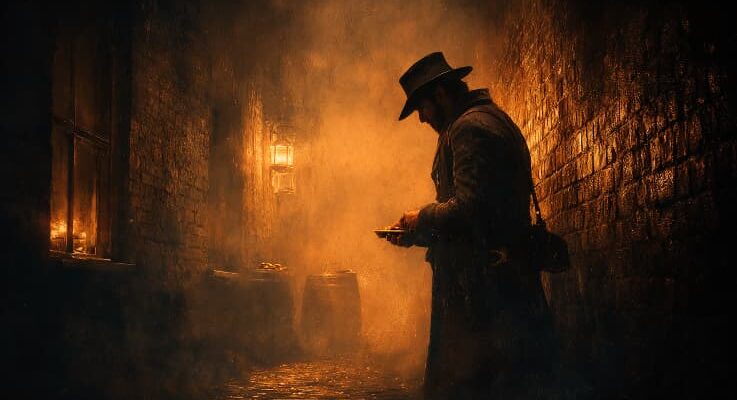
Walk down any Melbourne laneway today and you’ll find coffee shops, street art, and trendy bars. But these same narrow passages once hid a different world. Behind unmarked doors, in basement rooms thick with smoke, men gambled away everything they had. Some left with pockets full of gold. Most didn’t.
These were dark, secretive places where the law didn’t reach and fortunes changed hands every night.
When Gold Rush Money Met Dark Corners
The 1850s gold rush brought thousands of people to Melbourne, and many arrived with gold in their pockets. The city exploded almost overnight. And wherever there’s quick money, there’s always someone ready to take it.
The laneways became perfect hiding spots for illegal gambling. Little Bourke Street, in particular, earned a rough reputation. Shop owners would rent out back rooms. Others dug out basements. From the street, these places looked like ordinary buildings.
Modern gambling looks completely different. Online gambling platforms operate legally, under supervision and regulations that ensure player safety. Today, casinos attract players to register through various bonuses and promotions, such as free cash or free spins. You can find an example of such casinos here: pl.polskiesloty.com/darmowa-kasa-za-rejestracje-bez-depozytu/ In the past, however, nothing was regulated or safe – you would enter with your money and have no certainty whether you would leave with more.
Secret knocks got you through the door and lookouts watched for police. If you knew the right people, you could find a game any night of the week.
What Happened Inside
These gambling dens weren’t all the same. Some were rough rooms with a table and a few chairs. Others tried to look fancy, with curtains and better furniture. But they all had one thing in common: the house usually won.
Popular games included:
- Two-up (flipping two coins, simple but addictive)
- Card games like poker
- Dice games
- Fan-tan (common in Chinese-run establishments)
Anyone could end up in these rooms. Rich merchants sat next to dock workers. Gold miners freshly arrived from the fields gambled alongside local shopkeepers. Money was the only thing that mattered.
The air was always thick with tobacco smoke. Men would sit for hours, sometimes all night. Some walked away winners. Many lost their week’s wages in minutes.
The Chinese Quarter and Fan-Tan Houses
The eastern end of Little Bourke Street became Melbourne’s Chinatown. Chinese immigrants brought their own gambling traditions, and fan-tan houses opened up throughout the area.
Fan-tan was straightforward. Someone would put buttons or coins under a bowl, then divide them into groups of four. Players bet on what the remainder would be. Easy to learn, hard to quit.
But these places were more than just gambling rooms. They were community spaces where Chinese immigrants could speak their language and connect. Gaming was just part of it. Tea, conversation, and news from home all happened in the same rooms.
Police also targeted Chinese gambling dens harder than European ones. The racism of the time meant stricter raids and harsher penalties, even though both groups were breaking the same laws.
Who Really Made the Money
The gamblers might win or lose on any given night but certain people always profited. Building owners charged high rent and asked no questions. They knew what was happening in their properties.
Some police officers took regular payments to look the other way. A few coins each week meant advance warning before raids. This corruption ran deep through the system. The people running these operations sometimes got rich and a few even managed to move into legitimate businesses later, though everyone knew where their money came from.
What’s Left Today
Melbourne’s laneways look completely different now. The City of Melbourne has turned them into one of the city’s biggest attractions. Tourists come specifically to explore these narrow streets.
But if you look closely, you can still see hints of the old days:
- Odd doorways that lead to basement levels
- Strange room layouts in older buildings
- Stories passed down by longtime Melbourne families
The transformation shows how much attitudes toward gambling have changed. What was once pushed underground now happens openly, with rules and regulations.
History Under Your Feet
Melbourne’s gambling dens are mostly forgotten now. The laneways have moved on, transformed into fashionable destinations. But that rough, desperate past is still there, just under the surface.
Next time you’re sipping coffee in a Melbourne laneway, remember: you might be sitting exactly where someone lost everything over a card game 150 years ago. The city’s respectable present sits right on top of its messy, complicated past. That’s just how cities work.