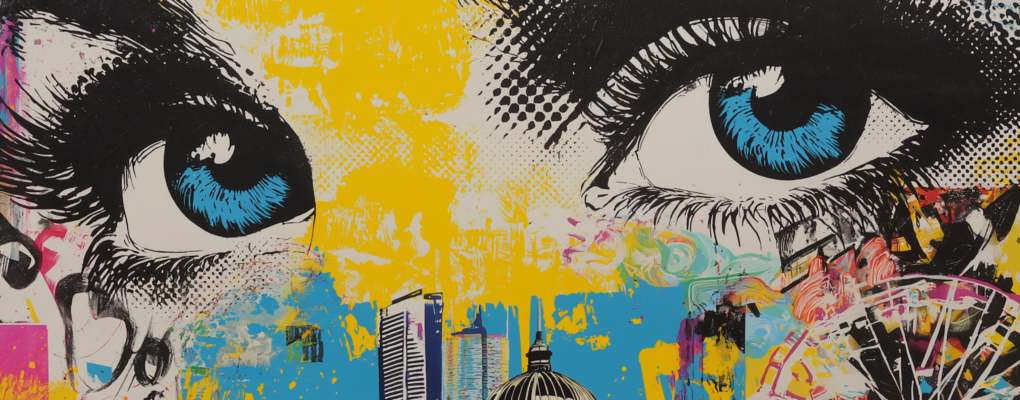
Melbourne’s street art is often introduced as one of the city’s most photogenic attractions. Visitors walk through Hosier Lane, AC/DC Lane or Union Lane with cameras ready, looking for color, scale and surprise. At first glance, the walls seem to offer an open-air gallery: murals, tags, paste-ups, stencils and layered images changing from one visit to the next. But to see Melbourne’s street art only as decoration is to miss its deeper role. These walls do not simply make the city look more creative. They record how the city thinks, argues, remembers and changes.
Street art in Melbourne works like an urban archive because it captures public feeling in real time. Traditional archives usually preserve official documents, photographs, newspapers and institutional records. They often tell history after it has already been organized. Street art does something different. It records the unfinished present. A wall can respond to a political debate, a housing crisis, a social movement, a cultural celebration or a moment of collective grief long before that moment enters museums or history books.
This is why walking through Melbourne’s laneways can feel like reading a changing public diary. The city’s walls hold traces of many voices, not just one authorized version of events. Some works are carefully painted and signed. Others are rough, urgent and anonymous. Some disappear within days, covered by new layers. Others remain long enough to become part of the visual memory of a place. Together, they create a record that is unstable but honest in a way polished monuments often are not.
The City Written on Walls
Melbourne has always been a city of layers. Its architecture shows colonial history, gold rush wealth, industrial expansion, migration, modern development and constant rebuilding. Street art adds another layer to this story. It does not replace buildings or monuments; it writes over and beside them. It turns blank walls, service alleys and forgotten corners into surfaces where the city can speak.
This is especially important in laneways. Many of Melbourne’s famous alleys were once practical spaces for deliveries, storage and back entrances. Over time, they became cultural corridors. Street art helped transform them from overlooked passages into places of attention. The walls made people slow down. They encouraged walking, looking and noticing. In this sense, street art changed not only the appearance of these spaces, but also the way people move through them.
A mural can make an ordinary corner memorable. A stencil can turn a wall into a comment. A layer of paste-ups can reveal what a neighborhood is concerned about. Even when individual works are temporary, the habit of using walls as public expression gives these spaces a continuing identity.
An Archive of Change
One of the strongest reasons to call Melbourne’s street art an archive is its relationship with change. Cities constantly remove, renovate and replace. Old shops close. Rents rise. Warehouses become apartments. Small venues disappear. Communities move. Official urban development often presents this as progress, but street art can show the emotional cost of that progress.
Artists often respond to what is being lost. They create images that refer to disappearing local culture, music scenes, independent businesses, migrant histories or public spaces under pressure. Sometimes the message is direct. Sometimes it appears through mood: nostalgia, anger, irony, humor or mourning. The wall becomes a place where urban change is not just measured in property values, but felt.
This makes street art different from decorative public art commissioned to beautify a district. Decoration usually tries to make a place look pleasant. Street art often does something less comfortable. It interrupts. It questions. It refuses to let the city become too smooth. It reminds walkers that behind cafes, towers and polished streets there are conflicts about who belongs, who is seen and what gets erased.
Memory Outside the Museum
Museums and galleries play an important role in preserving art, but they also separate artworks from everyday life. Street art remains embedded in the city. It is seen by commuters, students, tourists, workers, residents and people passing by without planning to encounter art at all. That everyday visibility gives it a different kind of power.
Melbourne’s street art is not experienced in silence under controlled lighting. It is experienced with traffic noise, coffee cups, construction sounds, rain, crowds and conversations. The context is part of the meaning. A mural in a laneway does not only show an image; it belongs to the rhythm of the street around it.
This is why street art can preserve memories that do not fit easily into formal institutions. It can reflect youth culture, underground music, activist networks, migrant identities, queer visibility, local jokes and temporary public emotions. These forms of memory are often too quick, too informal or too uncomfortable for official heritage systems. On walls, they find space.
The Value of Impermanence
An archive usually suggests preservation, but Melbourne’s street art archive is powerful partly because it is temporary. Works fade, peel, get painted over or are replaced by new pieces. This impermanence may seem like a weakness, but it is actually central to the form.
A city is not fixed. Its archive should not be fixed either. The constant layering of street art mirrors the constant layering of urban life. One image covers another, but rarely erases it completely. Edges remain. Colors show through. Old textures influence new compositions. The wall becomes a physical record of time.
This makes walking through Melbourne’s street art areas different from visiting a permanent collection. You cannot fully repeat the same experience twice. A lane seen last year may look different today. A piece photographed by thousands may be gone tomorrow. The disappearance creates urgency, but also honesty. It reminds us that urban memory is fragile.
More Than a Tourist Background
The popularity of Melbourne’s street art has created a tension. On one hand, attention helps people value the city’s creative culture. On the other hand, street art can easily become a tourist backdrop, reduced to colorful scenery for social media. When that happens, its meaning becomes flattened.
To treat street art as an urban archive, viewers need to look more carefully. Instead of asking only whether a wall is beautiful, they can ask what it responds to. Why is this image here? What mood does it carry? What neighborhood history might it connect to? What has been painted over? What kind of public voice does it allow?
These questions turn a casual walk into a form of reading. The city becomes legible through walls, layers and visual interruptions.
A Living Record of Melbourne
Melbourne’s street art matters because it keeps the city from becoming only a collection of buildings, brands and official stories. It gives space to unofficial memory. It shows that urban culture is not only planned by councils, developers or institutions. It is also made by people who leave marks, challenge surfaces and respond to the city as they experience it.
That is why Melbourne’s street art is more than decoration. It is a living urban archive: temporary, layered, emotional and public. It records not only what the city looks like, but what it feels like to live, walk, argue, remember and change within it.